
Applications of Fiber Laser Cutting Machines in the Metal Kitchenware Industry
2026-05-12


In the consumer goods manufacturing sector, the metal kitchenware industry has been particularly impacted by the revolutionary influence of laser technology. While traditional methods such as stamping, shearing, and machining are still widely used, they often present challenges—including high tooling costs, excessive burrs, significant material waste, and long lead times—when dealing with high-variety, low-volume, and customized orders.
Consequently, an increasing number of companies are adopting laser cutting machines for metal kitchenware manufacturing. Metal laser cutting machines, in particular, have become essential production equipment in modern kitchenware factories due to their high speed, precision, low maintenance requirements, and automation capabilities.
For cookware manufacturers, stainless steel sink factories, and OEM kitchenware suppliers, laser cutting technology not only boosts production capacity but also enhances product development and market responsiveness.
What are the Advantages of using CNC Laser Cutters in Kitchenware Manufacturing?
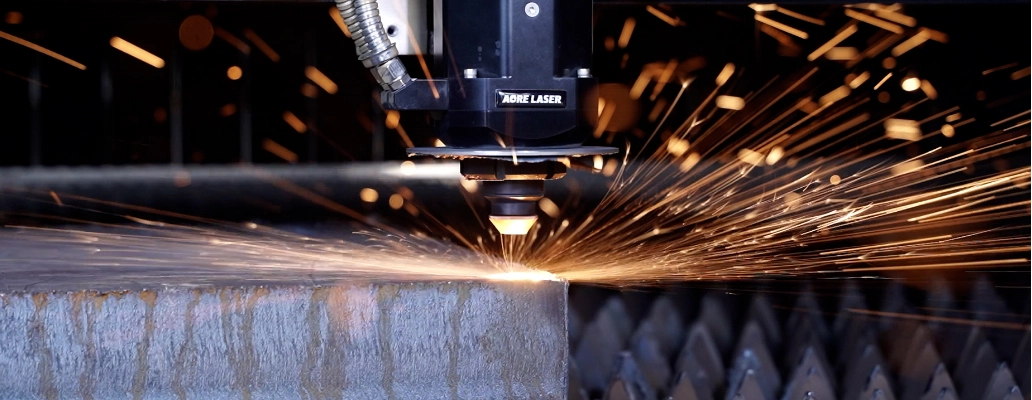
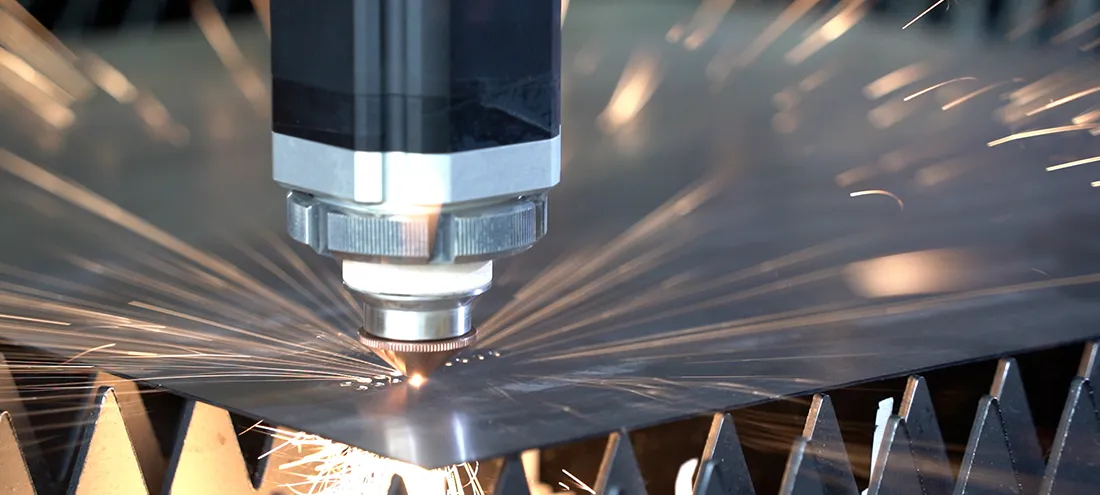
Laser cutting uses a high-energy beam to perform non-contact processing on metal sheets, achieving high precision, narrow kerfs, and a minimal heat-affected zone. This is particularly critical for the metal kitchenware industry.
1. Meeting the Demand for High-Precision Products
Kitchenware is a consumer product, and rough edges, misaligned holes, or uneven assembly directly impact product quality and brand image. Laser cutting effectively ensures dimensional consistency and edge quality.
2. Adapting to High-Variety Production Models
A factory might produce cookware components today, sink panels tomorrow, and cut kitchen storage parts next week. Laser equipment can quickly switch production through program changes, removing the need for frequent die replacements.
3. Improving Material Utilization
The prices of metal materials such as stainless steel and aluminum fluctuate significantly. For manufacturing companies with limited profit margins, improving material utilization directly increases profits. Steel laser cutters, equipped with intelligent nesting software, can optimize part layout and reduce scrap waste.
4. Shortening Delivery Cycles
Compared to traditional die-cutting, laser cutting offers greater efficiency advantages for small-to-medium batch orders and new product trials, significantly shortening delivery times.
5. Easy Automation Upgrades
Rising labor costs, recruitment challenges, and increasing delivery pressures are driving more factories to adopt automation. Laser cutting machines equipped with automated loading and unloading systems can rapidly establish intelligent kitchenware production lines.

Three Major Laser Cutting Applications in the Kitchenware Industry
1. Cabinets and Storage Units
Stainless steel cabinets are becoming the top choice for high-end residential and commercial spaces due to their eco-friendly, durable, and easy-to-clean properties. Laser cutting technology is most mature and effective in cabinet manufacturing. Fiber laser cutting machines are optimized for the cabinet industry, capable of flawlessly processing thin stainless steel sheets ranging from 0.5 mm to 2.0 mm, achieving high-speed, high-precision cutting. The integrated intelligent nesting system significantly improves material utilization, creating greater profit margins for cabinet manufacturers.
2. Commercial Kitchens and Food Preparation Equipment
Commercial kitchen equipment demands extremely high standards of durability and hygiene, making stainless steel the material of choice. Laser cutting technology plays a critical role in the manufacturing of products such as sinks, work surfaces, and cooktop panels.
Take stainless steel sinks as an example: traditional stamping processes often result in edge deformation and uneven thickness, which compromise sealing performance and service life. In contrast, laser cutting precisely cuts drain openings with smooth, burr-free edges, allowing for simple bending to form the final shape. 3D laser cutting technology can also perform round-edge cutting and hole punching on the formed sinks, ensuring product consistency and aesthetic appeal.
AORE's integrated laser cutting and laser welding solution enables end-to-end production of sinks—from sheet metal cutting to final welding—significantly improving production efficiency and product quality.
3. Cookware and Kitchenware Production
The cookware industry encompasses products such as woks, frying pans, soup pots, milk pots, and steamers, whose structures typically consist of multiple metal components, including the pot body, lid, handles, and base plate.
Common laser cutting applications include: blanking of pot body discs, cutting of lid sheets, machining of handle mounting holes, cutting of multi-layer composite pot bottoms, slotting of heat-conducting base plates, and decorative contour cutting. Subsequent processes for cookware typically involve stretching, stamping, welding, and polishing. If the precision of the initial blanking stage is insufficient, it will directly affect the quality of subsequent forming processes.
Laser cutting ensures the concentricity of circular blanks and the accuracy of hole positions, reducing rework rates at the source and improving the overall stability of the production line.
For mid-to-high-end cookware brands, consistent quality in the initial processing stage is particularly crucial.
Recommended Laser Cutting Machine Solutions for Kitchenware Manufacturing
For companies manufacturing cookware, sinks, tableware accessories, and storage products, equipment selection typically requires consideration of the following factors: cutting speed, long-term stable operation, machining precision, safety features, automation compatibility, and adaptability to multiple materials.
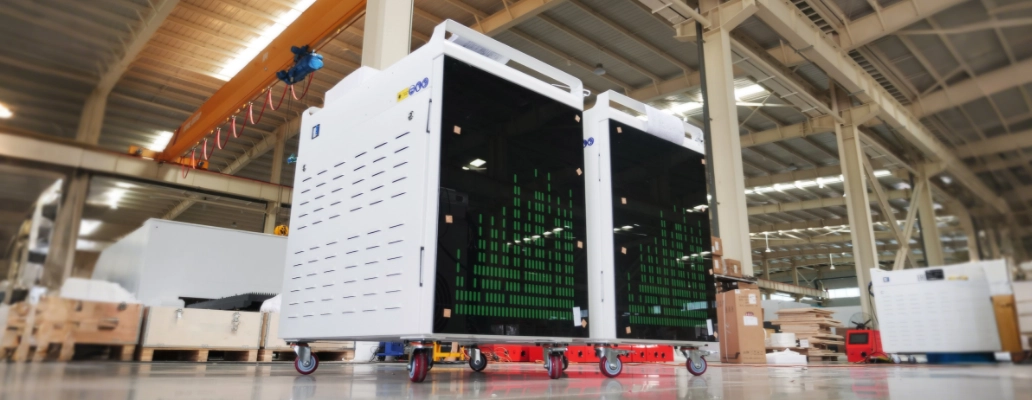
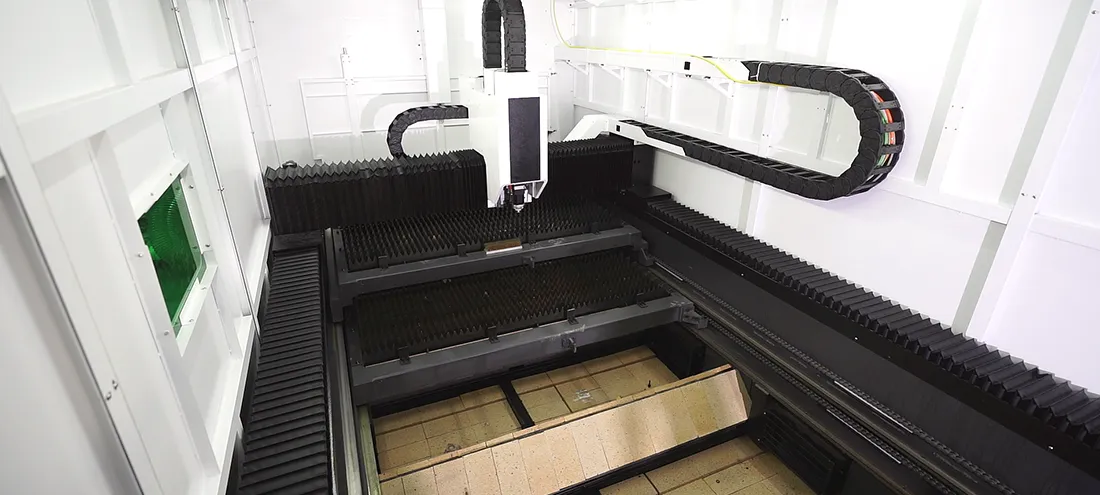
The AORE LASER PU Series fully enclosed high-speed sheet fiber laser cutting machine is one of the solutions suitable for kitchenware manufacturers looking to upgrade their production capacity.
Why is it suitable for the kitchenware industry?
1. The fully enclosed design enhances operational safety while improving dust control and the workshop environment.
2. High-speed cutting capabilities are ideal for the mass production of repetitive parts, helping companies increase output per unit of time.
3. High-precision, stable processing is particularly important for the kitchenware industry, which demands high standards for subsequent bending, welding, and assembly.
4. It supports continuous production and is compatible with automatic loading and unloading systems, enabling long-term stable operation.
5. It is compatible with multiple materials, including stainless steel, carbon steel, and aluminum—common materials used in kitchen products.
For companies looking to expand production capacity and improve delivery capabilities, this type of equipment offers a significant return on investment.
As a professional laser equipment manufacturer, AORE possesses extensive experience in the metal kitchenware industry. Our PU series fiber laser cutters are specifically designed for thin-sheet cutting, delivering high-speed, high-precision results. Additionally, we offer various enhancement options, such as automated loading and unloading systems, as well as integrated laser cutting and welding solutions. These help kitchenware manufacturers comprehensively improve production efficiency and product quality, leading to a higher return on investment.
Laser cutting technology is reshaping the way metal kitchenware is manufactured. Whether producing cookware, sinks, kitchen tools, or storage products, companies require more efficient, precise, and flexible production capabilities.
For kitchenware manufacturers, investing in the right laser cutting equipment is not only about increasing individual machine output but also a crucial step toward enhancing overall order fulfillment capacity, delivery speed, and profit margins.
To develop a customized equipment solution based on product type, material thickness, and production capacity goals, please contact AORE Laser for professional advice.
FAQ
Q1: Can you laser-cut 316 stainless steel?
A: Yes. As a type of austenitic stainless steel, 316 material has high viscosity and tends to produce dross during cutting. It requires 99.99% high-purity nitrogen as auxiliary gas and dedicated low-speed precision process parameters to achieve burr-free and smooth cutting surfaces, ideal for batch processing of kitchenware sheets and parts.
Q2: Why are the edges of my stainless steel parts rusting?
A: Rust on stainless steel cutting edges is mainly caused by cutting oxidation, impure gas source, residual cutting dust and humid storage environment. Excess oxygen in nitrogen or air leakage from gas pipelines will aggravate oxidation. Cutting dust attached to the workpiece may cause pitting corrosion when damp. Impure stainless steel material and untreated heat-affected zone without passivation will also lead to rust later. It is recommended to use high-purity nitrogen, clean cutting dust after processing, conduct passivation treatment, and store workpieces in a low-humidity environment.
Q3: Is it safe to laser cut aluminum?
A: Yes, but be mindful of reflections. Whenever possible, always cut from the matte (back) side. If you must cut from the mirror-finished side, ensure the film is intact and use protective film cutting technology to prevent bubbling.
Q4: What happens if I use oxygen on stainless steel?
A: It is not recommended to cut stainless steel with oxygen. The cut surface will turn black and harden. When chromium in stainless steel reacts with oxygen, it forms an oxide layer, which makes it difficult to blow away slag, reduces the quality of the cut, and compromises the material’s corrosion resistance.