
Applications of Laser Cutting Machines - Machinery Manufacturing Industry
2026-04-28


The machinery manufacturing industry is undergoing a significant transformation: product batch sizes are shrinking, structures are becoming more complex, yet delivery cycles are shortening.
Against this backdrop, the shortcomings of traditional cutting methods are becoming increasingly apparent.
For example, while flame cutting and plasma cutting are suitable for materials of different thicknesses, they share several common issues:
Cutting accuracy is inconsistent, requiring subsequent grinding or machining to correct.
Processes are fragmented, requiring secondary operations such as drilling and trimming after blanking.
High reliance on molds or fixtures hinders the production of multiple product varieties.
These issues rarely occur in isolation; rather, they compound to affect production cycle times, process coordination, and final delivery schedules.
The value of laser cutting lies in consolidating processing tasks—previously spread across multiple stages—into the “blanking” phase, thereby reducing intermediate steps and improving overall production efficiency.
What are the Applications of CNC Laser Cutters in the Machinery Manufacturing Industry?
1. Sheet Metal Processing for Machine Tool and Equipment Enclosures (Thin Sheets)
Sheet metal components such as machine tool enclosures and protective covers typically require high dimensional consistency and assembly precision.
The challenges of stamping processes include:
Reliance on dies, resulting in long development cycles;
Incompatibility with small batches or frequent model changes;
The advantages of laser cutting include:
No need for dies, making it suitable for high-mix production;
High hole positioning accuracy, facilitating subsequent bending and assembly;
Consistent cut edge quality, allowing direct progression to the painting process;
In actual production, it can significantly accelerate R&D response times.
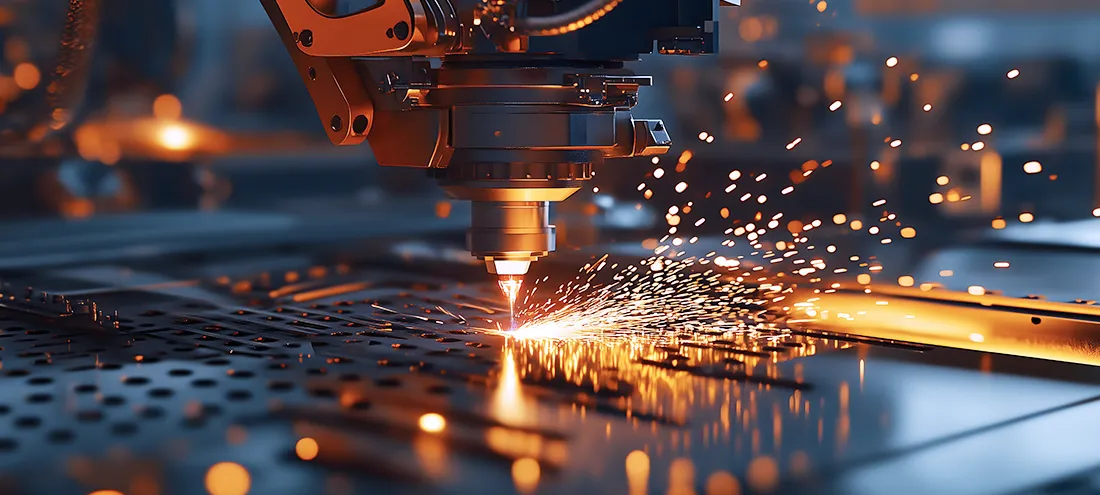
2. Cutting of Transmission Components and Brackets (Mass-Produced Parts)
These parts (such as mounting plates and connectors) typically have low unit value but are produced in large quantities, with material and blanking costs accounting for a significant proportion of total expenses.
The optimization approach for laser cutting usually begins with material utilization:
Improve sheet utilization through nesting and common-edge cutting.
Mix multiple parts in a single layout to reduce material waste from scrap edges.
Under appropriate conditions where hole diameter matches sheet thickness, laser cutting can also handle small holes and complex contours, thereby eliminating drilling and milling operations.
This improves material utilization and reduces direct material loss from scrap. Once the processing workflow is streamlined, combined with an automated loading/unloading system, it enables one operator to oversee multiple machines and achieve continuous production.
With stable order volumes, this helps improve equipment utilization and translates into more consistent output per unit of time.
3. Processing of Construction Machinery Structural Components (Medium-to-Thick Plates)
Construction machinery structural components typically use 10–25 mm carbon steel and feature numerous mounting holes and irregular contours.
When using traditional flame cutting, the main issues are:
Insufficient hole positioning accuracy, requiring secondary drilling;
Rough cut edges, requiring grinding before welding;
The improvements offered by laser cutting in this scenario are particularly evident in the machining results:
For medium-to-thin plates, high hole position consistency can be achieved.
Cut-edge quality is more stable, reducing the need for grinding and finishing before welding.
Complex contours and hole patterns can be formed in a single pass, reducing subsequent processing steps.
With fewer post-processing steps, the overall processing cycle time is typically shorter than that of traditional flame or plasma cutting.
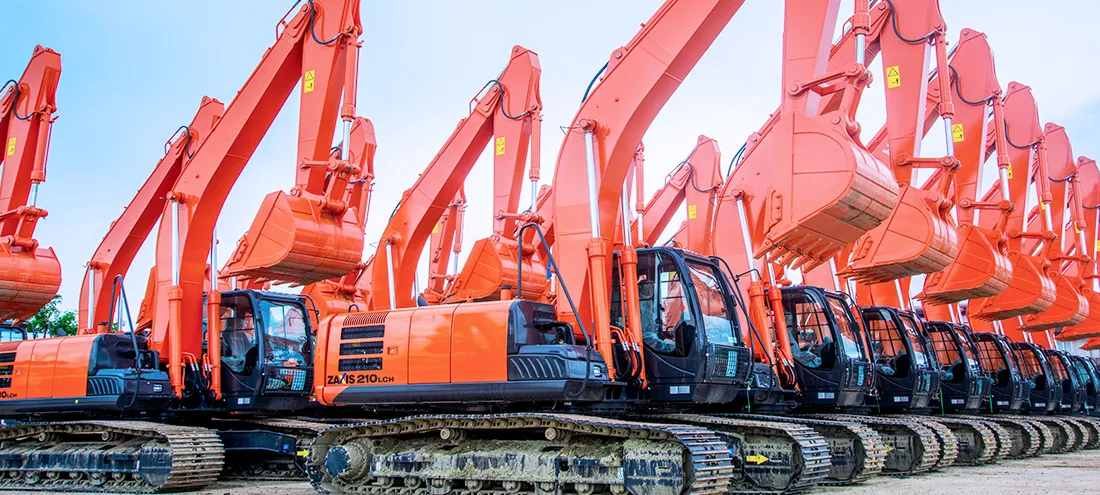
4. Blanking of Heavy-Duty Machinery Thick Plates and Large Workpieces
In industries such as steel structures and mining machinery, the processing of thick plates and large-sized workpieces is a critical step.
The main issues with traditional flame cutting include: high heat input, which leads to deformation, and poor cutting consistency.
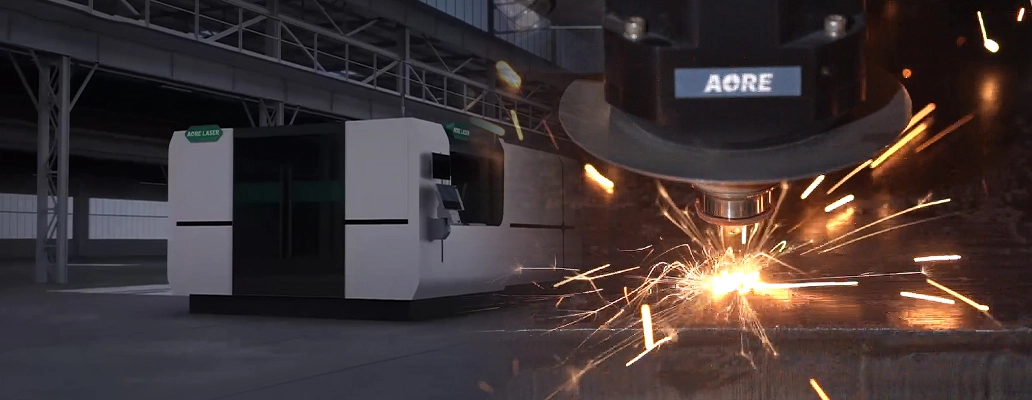
With the advancement of high-power lasers, they have already replaced traditional flame cutting in certain medium-to-thick plate applications.
In practical applications, this translates to:
A more stable cutting process for complex contours or continuous machining.
A smaller heat-affected zone, reducing the need for straightening;
Higher consistency in batch production;
For large plates (e.g., over 6 meters), wide-format equipment can reduce the need for splicing and repeated positioning, thereby improving overall processing efficiency.
What Advantages do Fiber Laser Cutting Machines Offer?
1. Shorter Lead Times
The impact of laser cutting extends beyond speed to include changes in production organization.
No need for mold development.
Quick product changeovers;
Fewer intermediate processes;
In environments with high-mix orders, production schedules are easier to adjust, and the ability to respond to rush orders is significantly enhanced.
2. Reducing Overall Manufacturing Costs
The cost advantages of laser cutting stem primarily from two aspects:
Material utilization: Through nesting optimization and common-edge cutting, sheet metal utilization is improved, directly reducing material costs.
Labor and process costs: Reduced post-processing such as grinding and drilling; decreased reliance on skilled operators, allowing for more flexible staffing; automated systems minimize manual intervention.
When combined, these factors make overall manufacturing costs more manageable.
3. Improving Product Quality and Consistency
In mass production, stability is more important than single-cut precision.
The advantages of laser cutting include:
High-dimensional consistency, reducing assembly adjustments;
Stable cut quality, facilitating welding;
High automation, reducing human error;
The result is a lower rework rate and a more controllable production process.
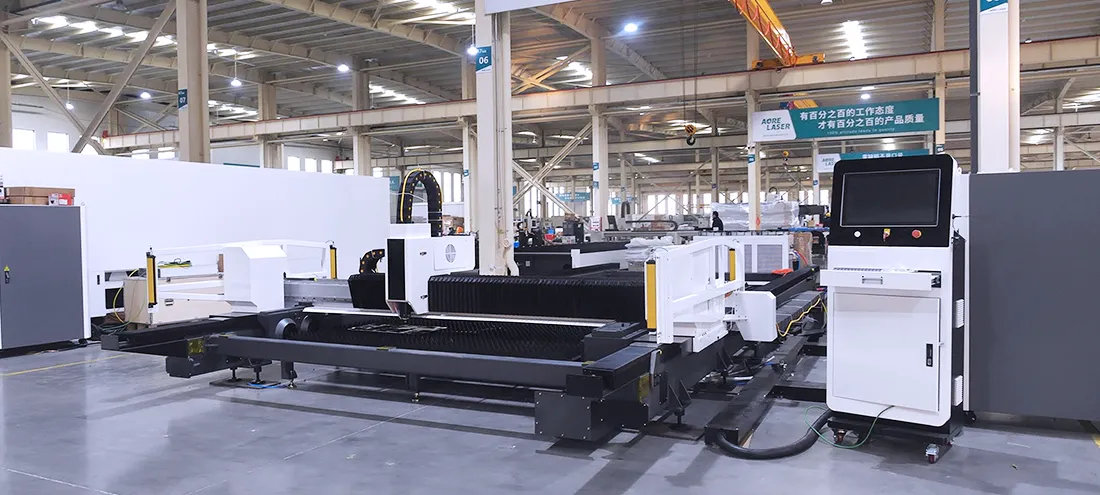
Laser Cutting Solutions for the Machinery Manufacturing Industry
When processing shifts from standard sheet metal to medium-to-thick plates or large structural components, the equipment’s capabilities become a critical factor.
For example, in the machining of construction machinery or steel structural components, common challenges include:
Large-sized plates requiring multiple positioning operations
Accumulation of heat-affected zones during thick-plate cutting
High consistency requirements for batch production
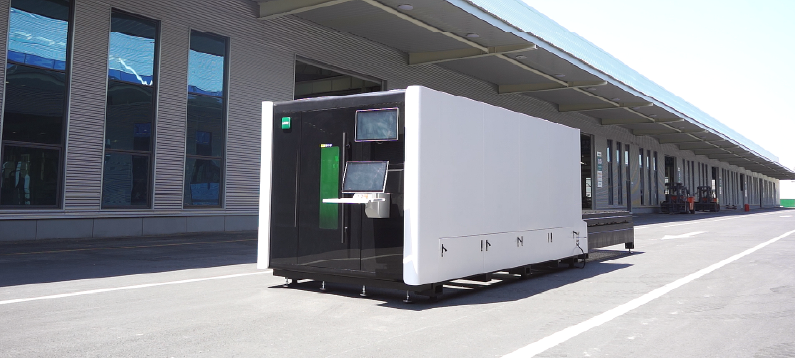
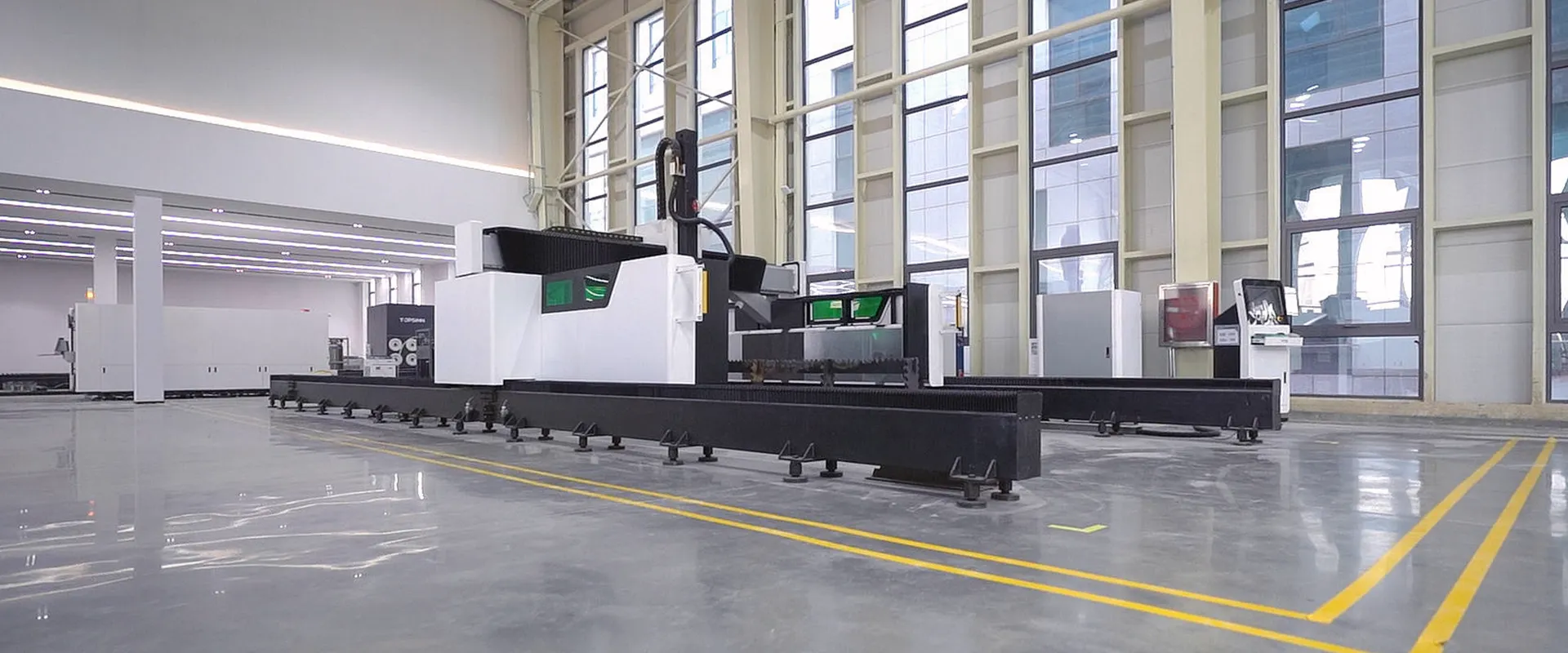
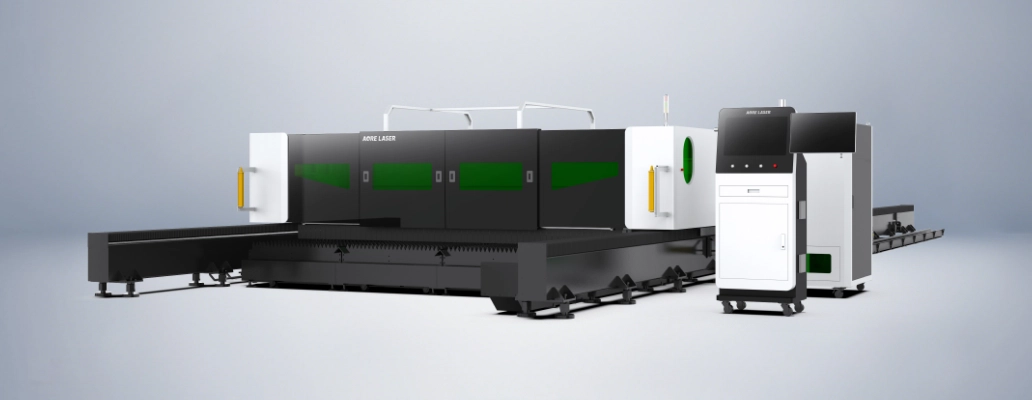
Under these conditions, equipment must simultaneously offer: sufficient processing area, stable thick-plate cutting capability, and structural stability for prolonged operation. Taking equipment like the GR—designed for large-format and thick-plate processing—as an example, its design is geared toward heavy-duty manufacturing scenarios:
Large-format processing reduces the need for panel splicing and repeated positioning
Stability in thick-plate cutting makes it better suited for continuous production
Modular structure facilitates future expansion
In these applications, working area capacity and thick-plate cutting stability often have a more direct impact on overall production efficiency than cutting speed alone.
Laser cutting is changing not just the cutting method, but the entire organization of the production process.
For mechanical manufacturing enterprises, this transformation will ultimately manifest in more controllable delivery schedules, more consistent product quality, and a clearer cost structure.
In practical applications, it is recommended to select a processing solution that best matches your production needs by considering actual operating conditions and conducting prototype testing and data validation.