What is a Bending Machine? - Press Brake Machine Buy Guide
2026-09-14


What is a bending machine?
A Bending Machine is a type of industrial manufacturing equipment that uses mechanical, hydraulic, or electrical forces to bend and form sheet metal, thick plates, tubes, or structural sections into specific angles and shapes.
Is a bending machine the same as a press brake?
Not exactly. “Bending machine” is a general term for all types of metal bending machines; “Press brake” refers to a specific type of bending machine that uses an upper die and a lower die to perform linear stamping and bending on sheet metal.
Bending machines: These include sheet-metal press brakes, pipe/tube bending machines, roll bending machines, and panel benders.
Press Brake (Sheet Metal Bending Machine): A machine tool that uses upper and lower dies to apply pressure to metal sheets, causing them to undergo plastic deformation to achieve specific angles and shapes;
Core Function: To process flat metal sheets into various three-dimensional structural components
What are the different types of bending machines?
Based on the workpiece and drive method, bending machines are classified as follows:
Classification Criteria | Machine Type | Key Features & Applications |
By Material | Press Brake Machine | Designed for linear sheet metal bending, supporting complex multi-angle forming. |
Pipe / Tube Bender | Specialized in bending pipes and tubes (round, square, and custom profiles). | |
By Drive Mechanism | Standard Hydraulic Press Brake | Traditional hydraulic drive (torsion bar synchronization) with high tonnage output. Simple design and cost-effective, suitable for low-to-medium precision requirements. |
Servo-Electric Press Brake | All-electric servo drive offering ultra-high precision and energy efficiency, though restricted by maximum tonnage capacity. | |
Electro-Hydraulic CNC Press Brake | Combines high-tonnage hydraulic force with closed-loop servo control; the optimal solution for high-precision, high-volume production. |
For example, the Aore Laser A-Bend Electro-Hydraulic CNC Press Brake, which is specifically designed for the automated handling and repetitive production of cabinet components, door panels, and similar sheet metal parts.
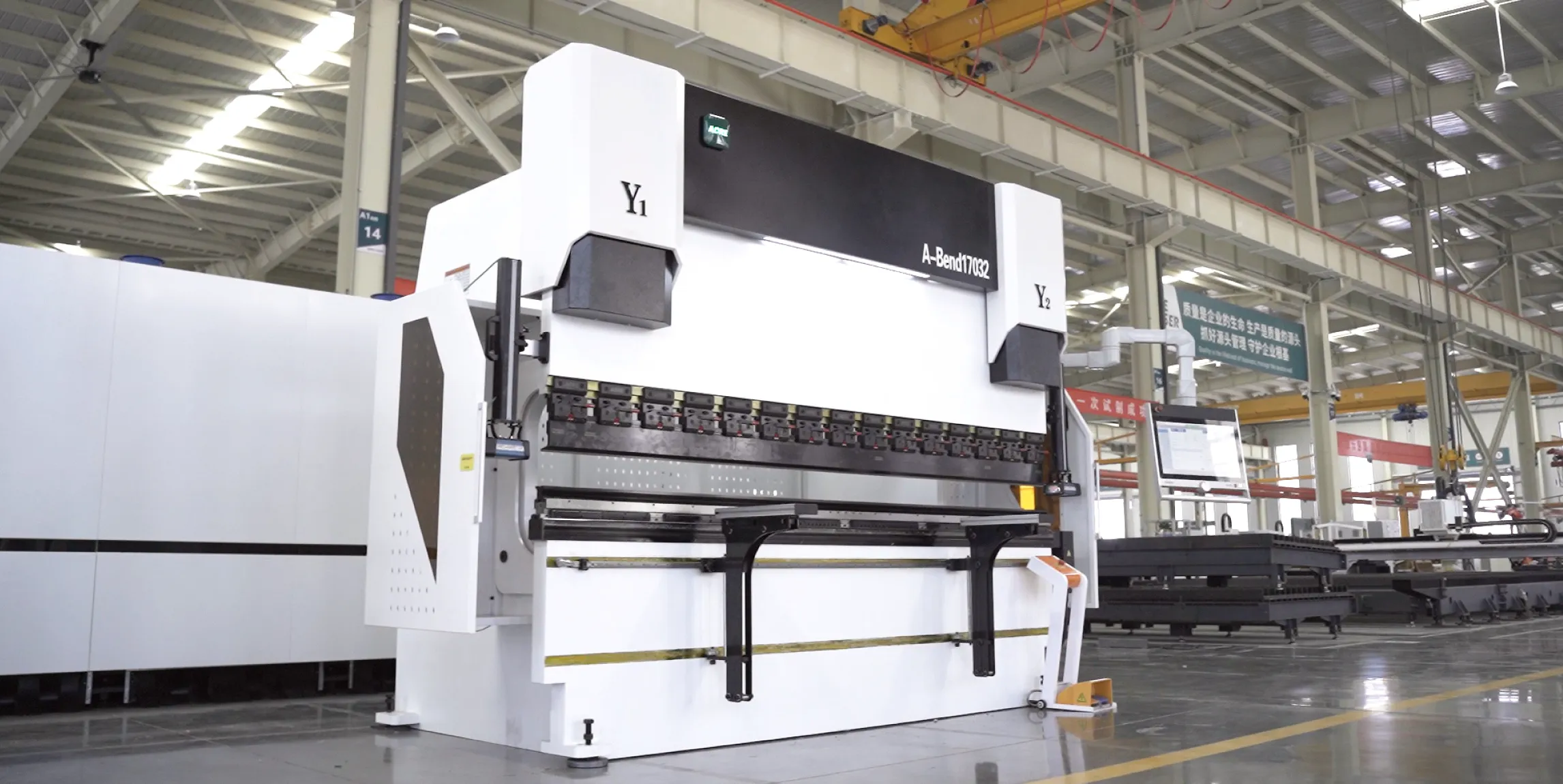
What Materials Can an Electro-Hydraulic CNC Press Brake Process?
Bending machines can process most ductile metal and alloy sheets, such as carbon steel/galvanized sheet, stainless steel, and aluminum alloys.
For different materials, the bending tonnage and springback compensation must be adjusted based on their yield strength:
Carbon Steel (Mild Steel): The most common material for processing; it is easy to form and exhibits minimal springback.
Stainless Steel: High hardness and tensile strength; the tonnage required for bending is typically 1.5–2 times that of carbon steel, and springback is more pronounced.
Aluminum and Aluminum Alloys: Good ductility but prone to surface cracking; typically require a wider lower die V-groove.
High-Strength Steel and Titanium Alloys: Used in heavy machinery and aerospace applications; require extremely high tonnage and wear-resistant dies.
What are the applications of a press brake machine?
Press brake machines are used across virtually all metal fabrication industries:
Electrical and Cabinet Manufacturing: Cabinets, electrical distribution boxes, server racks, HVAC ductwork, and air conditioning housings.
Transportation and Automotive Manufacturing: Body structural components, truck bodies, rail transit interiors, and chassis components.
Architectural Sheet Metal and Steel Structures: Elevator cabs, metal curtain walls, architectural door and window frames, and ceiling panels.
Heavy Industry and Machinery: Construction machinery arms, agricultural equipment housings, and structural components for oil storage tanks.
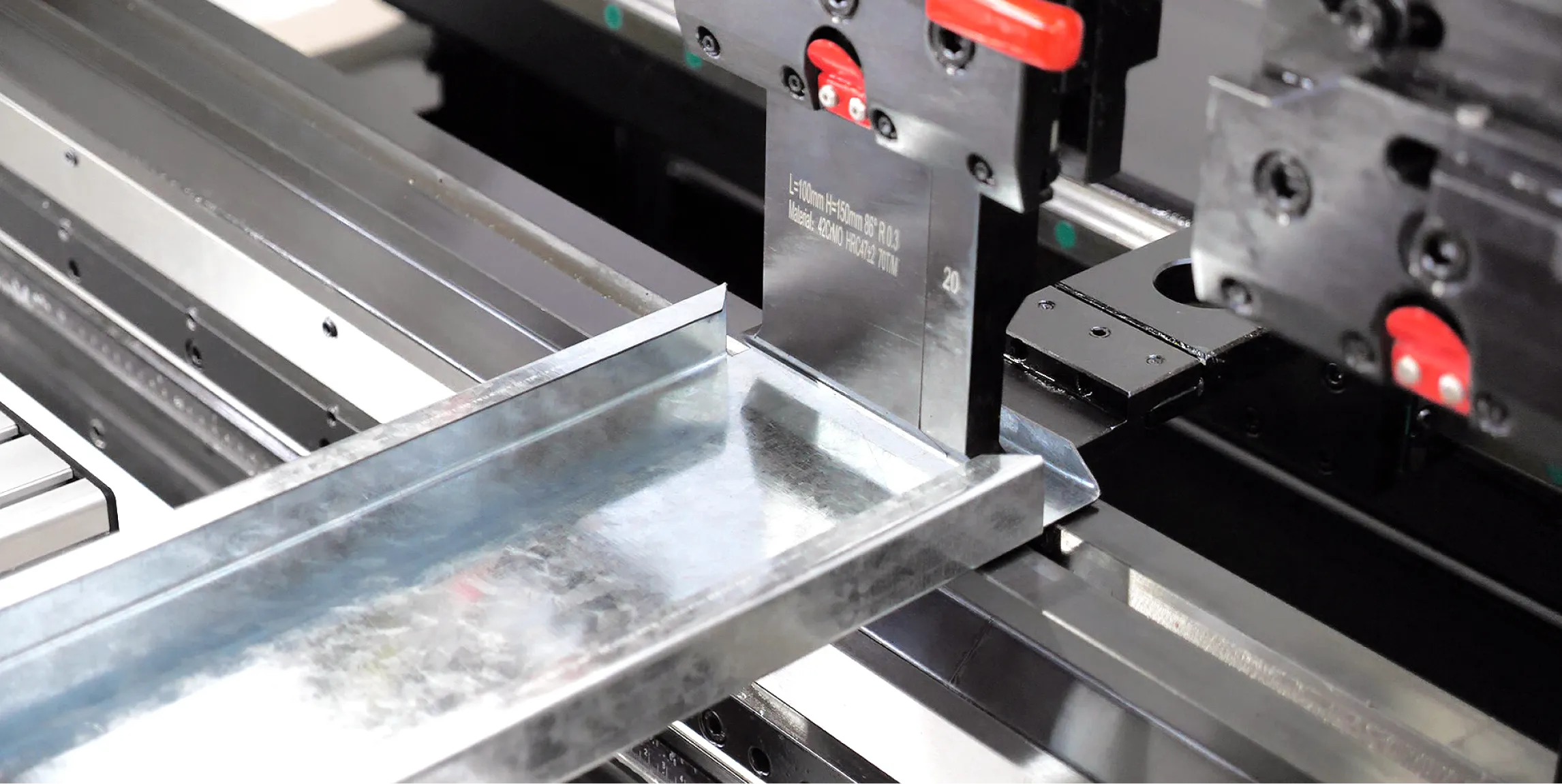
How to Choose the Right Bending Machine?
To select a suitable press brake machine, you can refer to the following seven criteria:
1. Define Bending Machine Processing Parameters
Materials to be processed: carbon steel, stainless steel, aluminum, copper, etc.;
Material thickness: maximum and minimum thicknesses;
Maximum bending length: the longest length the workpiece needs to be bent;
Bending angle and precision requirements;
Batch size and product types.
These parameters directly determine the press tonnage, table length, and control method.
2. Determine Tonnage of press brake machine:
Calculate the required pressure based on the maximum sheet thickness, tensile strength of the sheet material, and maximum bending length.
3. Determine Bending Length:
The machine’s table length must be greater than or equal to the longest side of the sheet to be processed.
4. Select Drive and Control Precision:
Simple structural parts / limited budget: Standard hydraulic torsion-axis press brake;
High precision, multiple angles, complex workpieces: Electro-hydraulic CNC press brake; For example, the Aore Laser A-Bend employs a high-precision CNC system and advanced hydraulic bidirectional servo drive to easily handle bending requirements involving multiple angles and high repeatability.
5. Number of CNC Axes:
Advanced models: 4+1 axes (with an additional R-axis for vertical stop movement);
Complex models: 6+1 or 8+1 axes (independent control of multiple axes such as Z1, Z2, X1, and X2, suitable for multi-stage bending).
6. Electro-Hydraulic Servo Press Brake Throat Depth
Throat depth = the distance from the ram to the inner side of the machine column.
For standard enclosures: 300 mm is sufficient.
For deep boxes and large-sized workpieces: a large throat depth of 400–450 mm is required.
If the throat depth is insufficient, the workpiece cannot fit inside, making machining impossible.
7. Brand and After-Sales Service
Bending machines are heavy-duty equipment; no matter how high-quality the machine is, inadequate after-sales service can cause significant problems. You should check whether the manufacturer has stock on hand or the ability to deliver quickly; whether they provide installation, commissioning, and operator training; and the quality of the equipment, steel plate thickness, and brands of hydraulic components.
Electro-Hydraulic Servo Press Brake from small manufacturers may be cheaper, but if the manufacturer goes out of business or you can’t find anyone to repair them, they’ll essentially become scrap metal down the line.
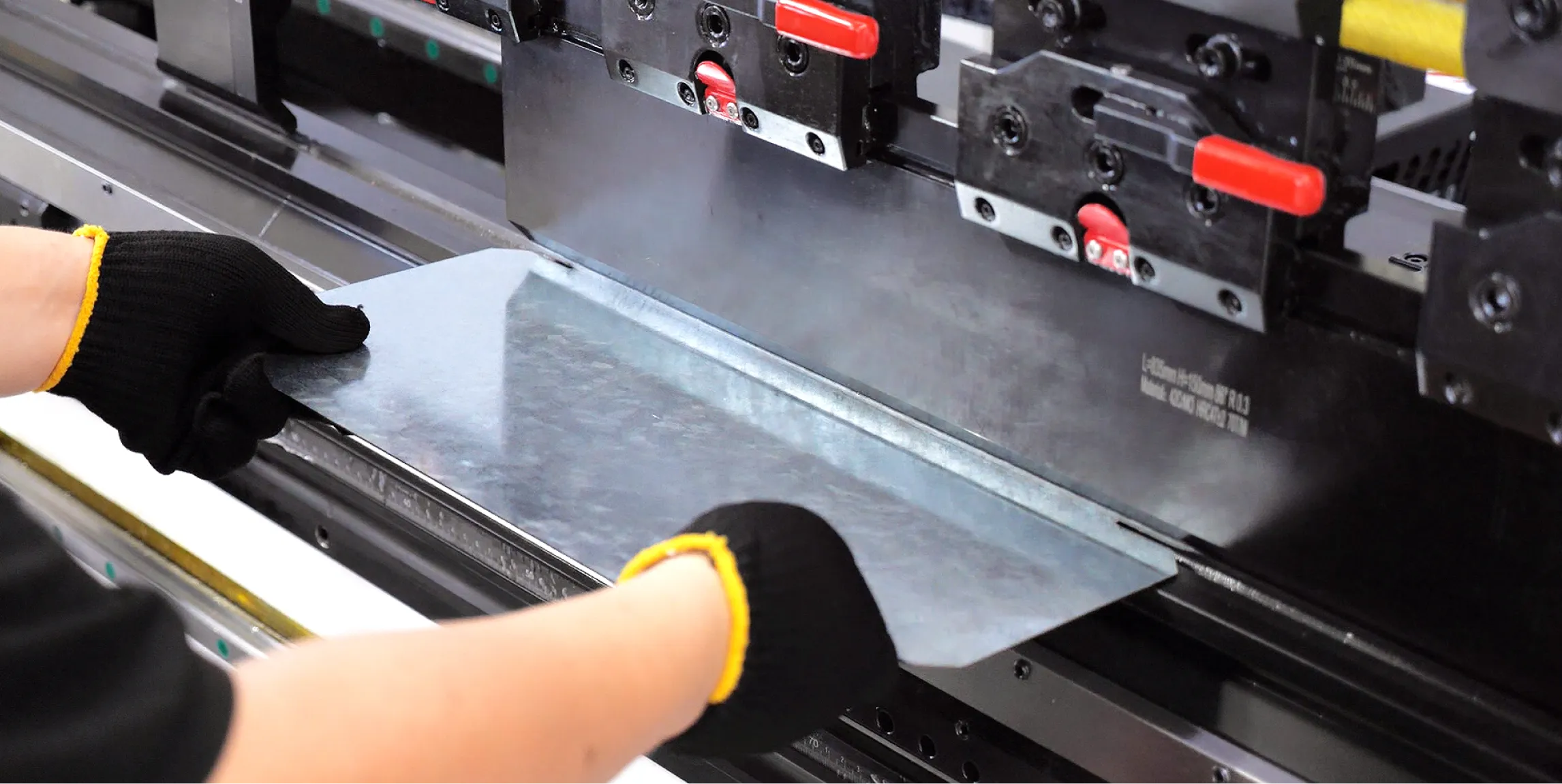
Aore Laser Electric-Hydraulic CNC Sheet Metal Bending Press Solution
As a professional supplier of industrial sheet metal processing equipment, the electric-hydraulic CNC sheet metal bending presses we develop and manufacture are specifically designed for high-precision, heavy-duty modern manufacturing applications:
The CNC system utilizes the next-generation touchscreen control system from the internationally renowned brand Delem, providing a modern, integrated, and multifunctional solution for the bending press.
Mechanical Deflection Compensation: The mechanical compensation table consists of uniquely machined and heat-treated wedge blocks. The relative displacement compensation for each set of wedge blocks is designed based on the deformation of the upper and lower beams under operational loads.
Hydraulic System: A complete set of imported Rexroth components from Germany, utilizing the most advanced electro-hydraulic servo synchronous control system. The three-section hydraulic system ensures high synchronous precision, while the cylinder seals—from internationally renowned brands—provide excellent sealing performance and a long service life.
Front Material Support Device: The front material support frame is supported by rollers along linear guides on the Z-axis. It can be manually moved to the appropriate position and secured according to the workpiece length. The support frame is adjustable in both the horizontal and vertical directions.
Laser Safety Protection (Optional): Active hand-protection system. It projects an invisible laser safety plane between the ram and the die. If an operator’s hand (or any foreign object) enters the danger zone, the system forces the ram to stop its downward movement or even reverse course within milliseconds, directly preventing crush injuries.
Frequently Asked Questions
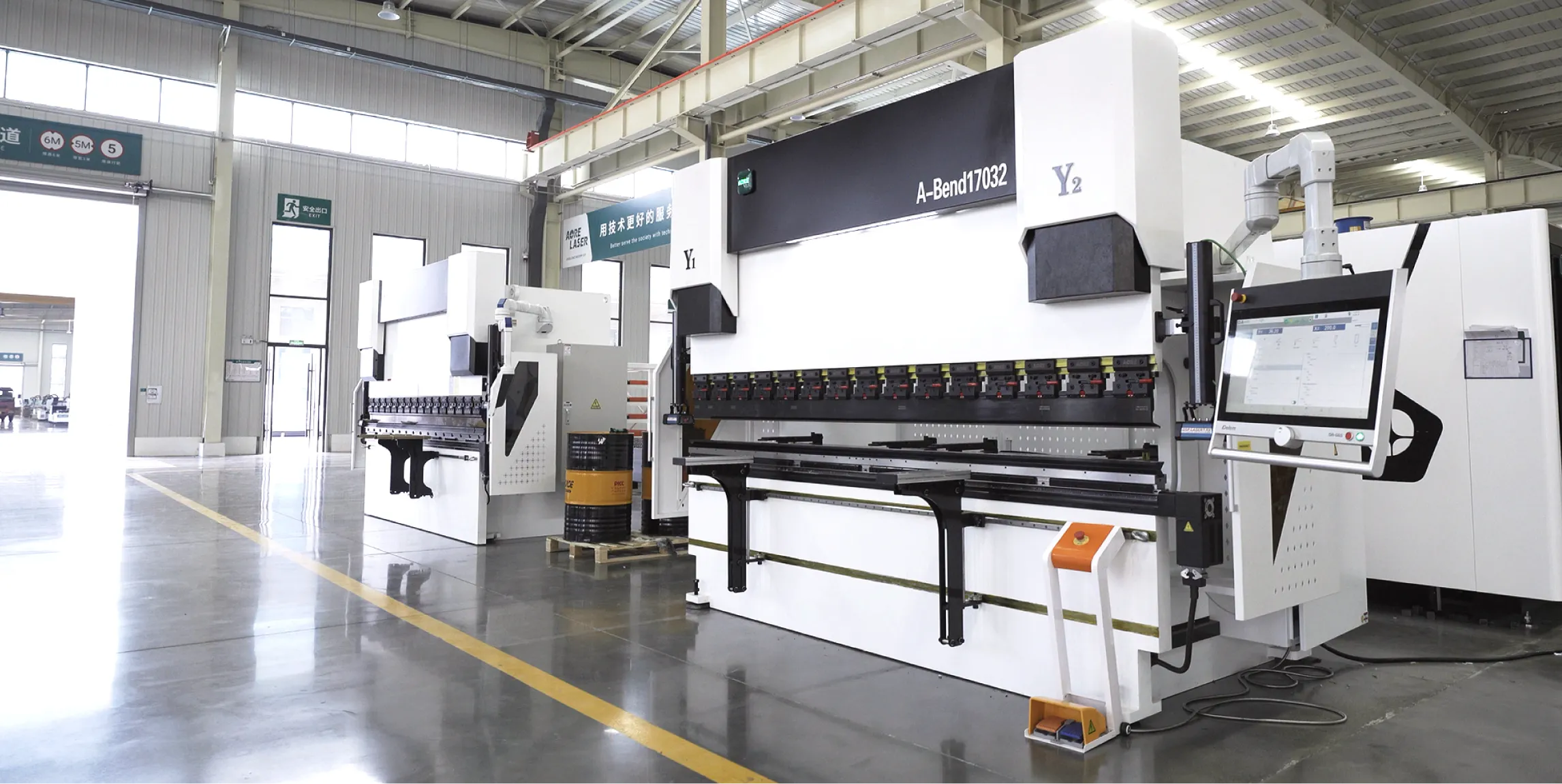
Q1: What is the primary advantage of Y1/Y2 independent control in Electro-Hydraulic Press Brakes?
In an electro-hydraulic CNC press brake, Y1 and Y2 represent the independent drive axes of the left and right hydraulic cylinders. High-precision linear encoders are installed on both sides to provide position feedback, and the CNC system independently adjusts the oil flow on each side via electro-hydraulic servo valves at a frequency measured in milliseconds. This closed-loop control ensures that the ram remains absolutely level and synchronized even during one-sided off-center bending or the processing of long sheets, achieving a machining accuracy of ±0.01.
Q2: How does the CNC Crown system work on a press brake?
When bending high-tonnage or long sheets, the ram and worktable undergo elastic deformation—bending outward due to the applied force—resulting in a larger bend angle in the center of the workpiece and smaller angles at both ends. The CNC deflection compensation system (Crown System) uses the CNC control system to automatically calculate the amount of deformation based on the sheet’s thickness, length, and material. It then drives multiple sets of inclined wedges inside the worktable to create a slight, opposite bulge, offsetting the deformation caused by the applied force and ensuring consistent angles along the entire length.
Q3: How do I choose the right press brake?
Based on your industry, workpiece material, maximum bending thickness, and maximum workpiece length, you can determine the required bending length and tonnage. You can also provide the manufacturer with your workpiece model drawings to finalize the press brake model.